How Proper Land Development Ensures Strong Foundations
How Proper Land Development Ensures Strong Foundations
Every successful construction project begins long before the first brick is laid. Proper land development and site preparation play a critical role in ensuring that a building or infrastructure project stands strong for many years. Without proper groundwork, even the most well-designed structures can face issues such as cracks, uneven settling, or structural instability.
Professional construction companies understand that land development is the first and most important step toward creating durable and reliable structures.
1. Site Clearing and Preparation
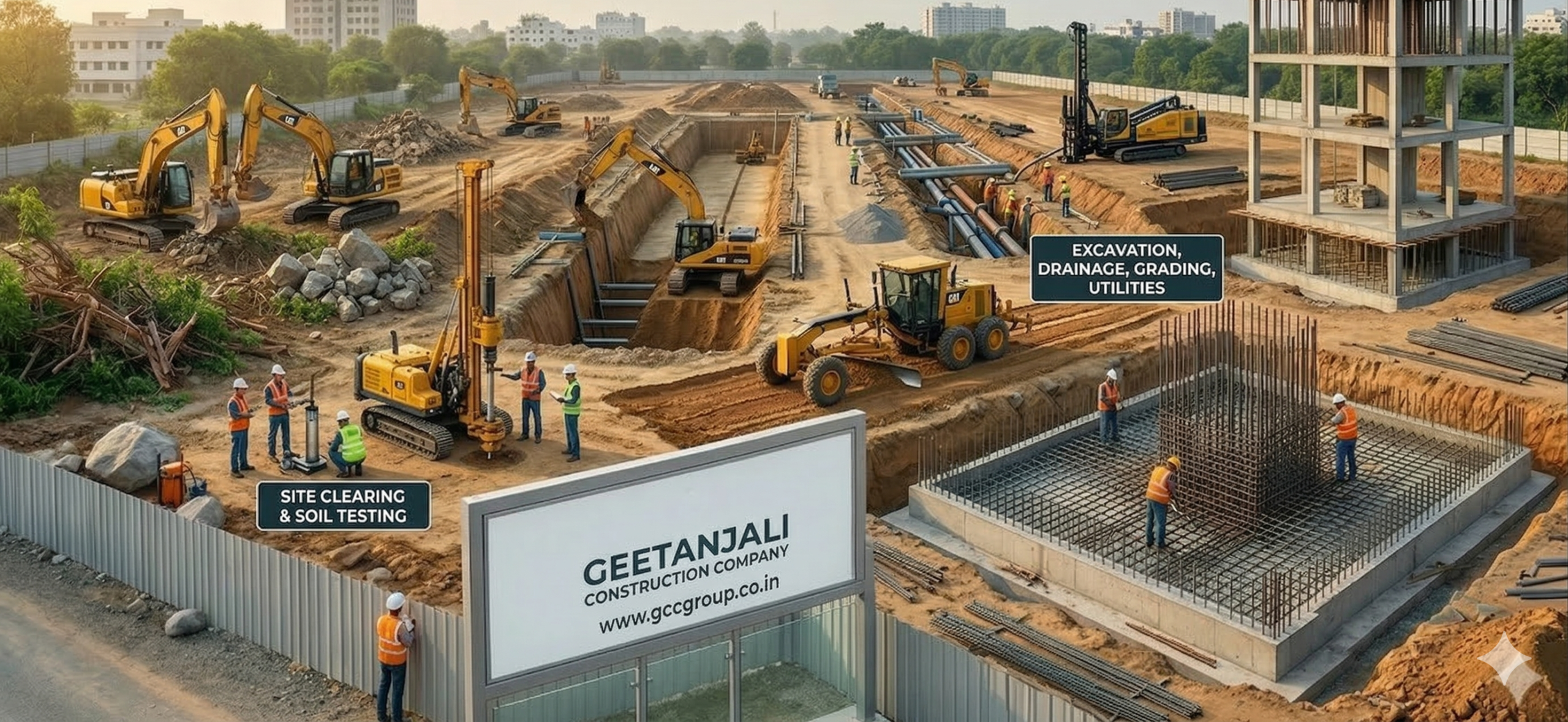
The first stage of land development involves clearing the site of unwanted materials such as vegetation, rocks, debris, and existing structures. This process creates a clean and safe working environment for construction.
Proper site clearing ensures that the foundation is built on stable ground and reduces the risk of obstacles that could weaken the structure over time.
2. Soil Testing and Analysis
Soil quality plays a crucial role in determining the strength of a foundation. Before construction begins, engineers conduct soil testing to understand its load-bearing capacity, moisture content, and stability.
This analysis helps determine the type of foundation required and prevents problems such as soil shifting or foundation settlement in the future.
3. Excavation and Earthwork
Excavation is an essential part of land development where soil is removed or relocated to create the desired foundation level. Proper earthwork ensures that the ground is leveled and prepared for construction.
Modern earthmoving equipment allows contractors to perform excavation accurately while maintaining the integrity of the surrounding land.
4. Proper Drainage Planning
Water management is another key factor in land development. Poor drainage can weaken soil and lead to foundation damage over time.
Construction professionals plan drainage systems to direct water away from the building site, ensuring the soil remains stable and preventing water-related structural issues.
5. Land Grading and Compaction
After excavation, the land must be properly graded and compacted. Grading ensures that the land has the correct slope and elevation, while compaction increases soil density and stability.
Proper compaction prevents uneven settlement and provides a strong base for the foundation.
6. Infrastructure and Utility Planning
During land development, construction companies also plan the placement of utilities such as water pipelines, electrical lines, drainage systems, and access roads.
Careful planning at this stage prevents future disruptions and ensures that infrastructure is integrated smoothly into the project.
How Geetanjali Construction Company Ensures Strong Land Development
With over 15 years of experience in earthwork, mining, infrastructure development, and building construction, Geetanjali Construction Company follows a systematic approach to land development for every project.
The company begins with detailed site analysis and soil evaluation to understand the conditions of the land before construction starts. Skilled engineers and machine operators handle excavation, grading, and compaction using modern earthmoving equipment to ensure precision and stability.
Proper drainage planning and infrastructure preparation are also carefully managed to maintain soil strength and prevent long-term structural issues. By maintaining strict quality standards throughout the land development process, Geetanjali Construction Company ensures that every project begins with a solid and reliable foundation.
Conclusion
Strong foundations are the backbone of any construction project, and they depend heavily on proper land development. From site clearing and soil testing to grading and drainage planning, every step plays a vital role in ensuring stability and durability.
By focusing on professional land development practices, construction companies can ensure that their structures remain safe, reliable, and long-lasting.